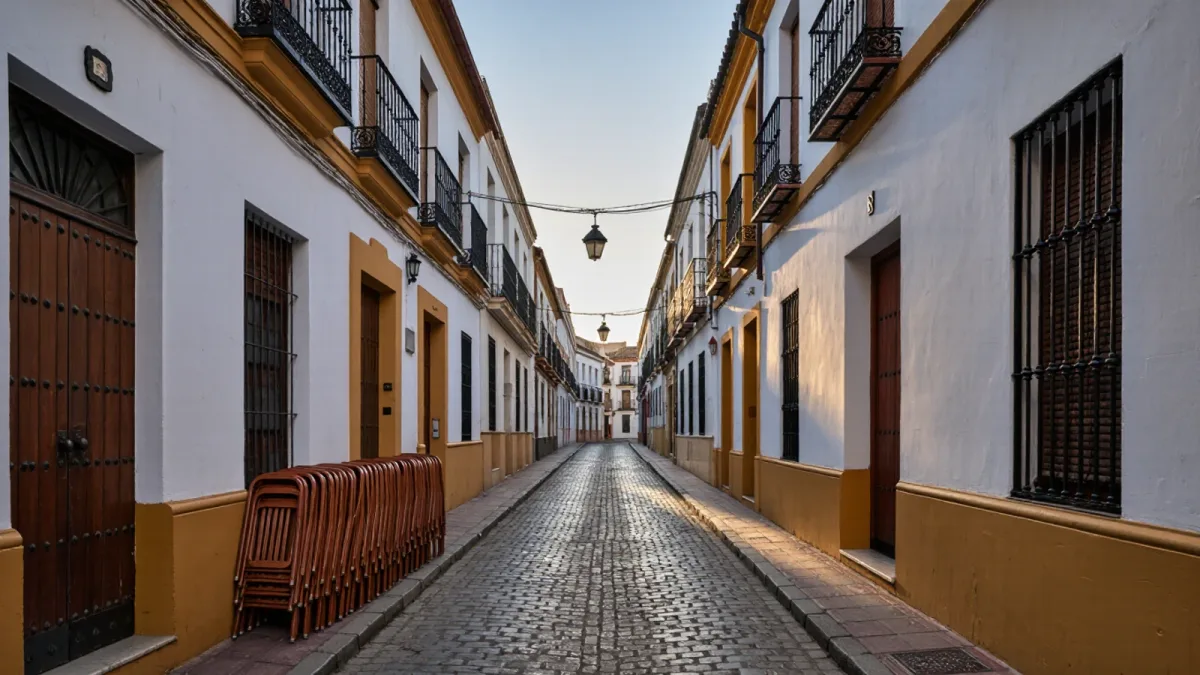
In three days, Seville's streets become a slow-moving church. Holy Week 2026 begins on Palm Sunday, March 29, and ends on Easter Sunday, April 5, with dozens of cofradías — the city's penitential brotherhoods — carrying their floats of Christ and the Virgin from neighborhood churches through the historic centre, per the official processions schedule published for the 2026 season.
Preparation is the story before the story. Through March, brotherhood workshops have been polishing pasos, training costaleros in the synchronized carrying that moves a float weighing more than a tonne, and rehearsing the bands that play behind each Marian float. Residents sand the curbs on the processions' corners so the pasos can turn — a detail of the week that recurs every year and belongs to no official program.
What happens on each day of Holy Week?
Each brotherhood makes one estación de penitencia, a station of penance, to Seville Cathedral on its assigned day. The week's most followed departures include La Madrugá, the small hours of Good Friday into Easter morning, when the most venerated Virgins — La Macarena, El Gran Poder, Esperanza de Triana — process through the sleeping centre. Crowds in the narrow streets of the old quarter are densest on Palm Sunday afternoon and throughout the night of Holy Thursday.
Related stories: Siena counts down to a Palio run in Tuscan July heat · The Tidal Basin's new seawall held back the water this spring.
What should a visitor know before going?
Per the 2026 schedule published by local brotherhood listings, processions run from midafternoon into the early hours, and mornings are the quiet hours in the old quarter. Balcony seating is sold by residents' associations, but the week costs nothing to follow on foot; the etiquette is silence at the Virgins and respect for the brotherhoods' rows of nazarenos. Hotels around the cathedral report booking out months in advance, as they do every year.
Why does the week matter beyond Seville?
Holy Week processions across Andalusia — Málaga, Granada, Jerez — draw their own followings, but Seville's is the largest and the most codified, with rules of order, dress and music that have accumulated since the seventeenth century. For eight days the city measures itself against that inheritance.
Brotherhood counts underline the scale. Seville's council of brotherhoods lists around sixty cofradías making the station of penance across the week, each with its own church, treasury and band, which is why the city's stage plans and street closures begin in February rather than in Holy Week itself.